Dadu Aur Madak
Saurashtra & Diu| Saurashtra
is the peninsula that comprises the bulk of Gujarat, separated from the
Kutch by the Gulf of Kachchh, and from the mainland by the gulf of
Khambat. We had found Bhuj so enchanting, that we had little time left
and chose to head as quickly as possible to Diu, which was one of the
places we had heard great things about. We passed one night in Rajkot,
heading the next day for Sasan Gir, a lion sanctuary in the south. On
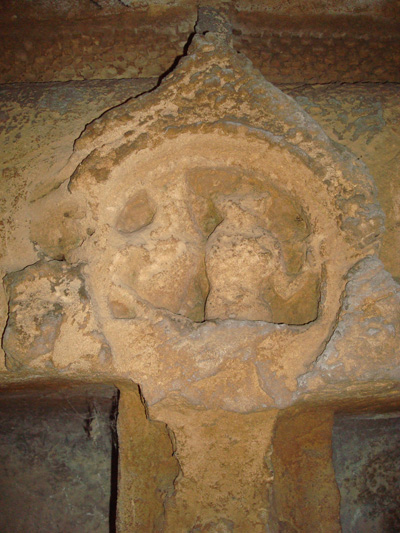
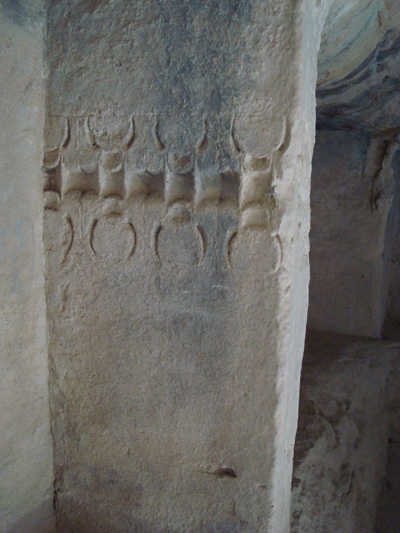
the way to Gir we took a little side trip to some cave temples near
Junagadh. Compared to the caves we would see later in Maharashtra these
were something of a let down. |
|
 |
 |
| The
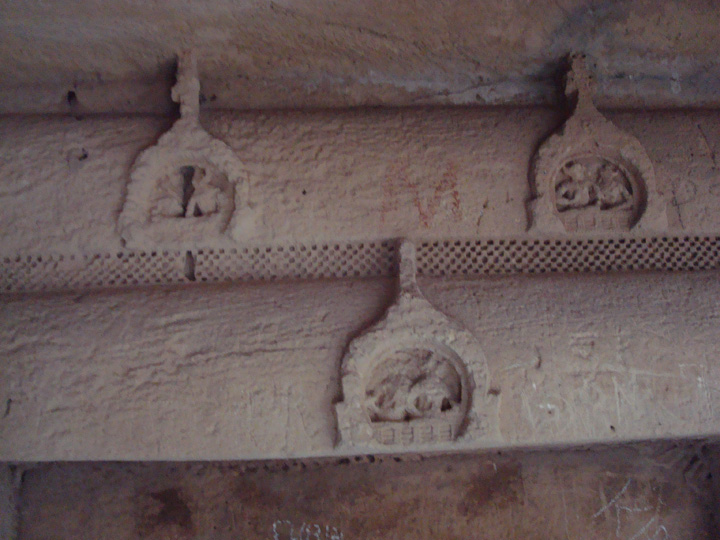
important thing about these Buddhist caves is that they date to the 2nd
century AD. The disappointing thing about them is the Archaeological
Survey of India, the same body that is responsible for gouging
foreigners up to 40 times the price of admission as locals to
visit India's historic sites, has allowed many of these sacred
treasures to be defaced by graffiti. (see below) |
|
 |
|
 |
|
 |
|
| We
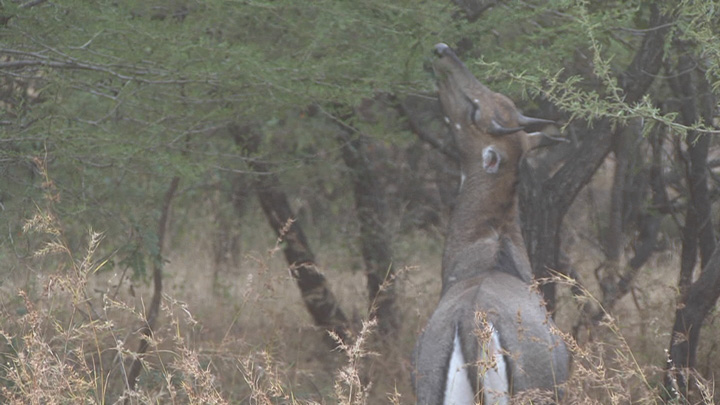
had a brief layover in Sasan Gir to visit a lion sanctuary. We were
lucky enough to get a couple of shots of two pairs (above), and this
rear view of a rare deer like animal called a blue bull. |
|
 |
|
| After
the sanctuary at Sasan Gir, we were off to one of our primary
objectives in Gujurat, the Island of Diu. Diu is a narrow island about
20 kilometers long seperated from the main land by about a kilometer of
salt marsh. What makes it interesting is that it was a Portuguese
enclave as recently as the early 1960s. The influence is evident even
before one arrives in Diu. Taking backroads south from Gir we began to
run through tiny villages as we approached the coast where the
inhabitants were almost all black. Many Indians have very dark
complexions, but these were people of obvious African origin. Whether
they were descendants of slaves, or simply laborers imported by the
Portuguese was something we were unable to discern. However, once you
arrive in Diu, the Portuguese influence is inescapable. |
|
 |
|
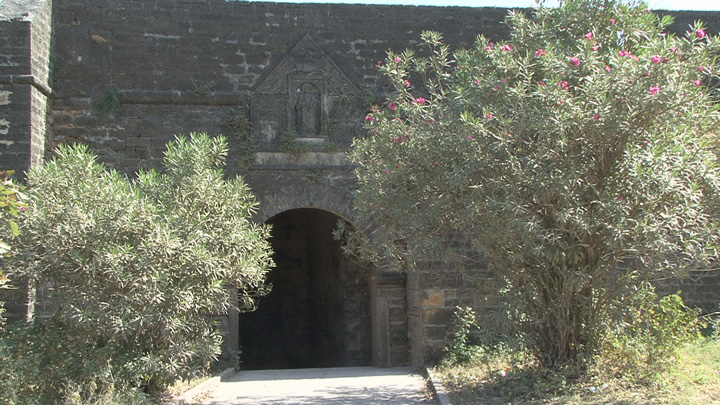
| Diu
Town occupies the eastern-most tip of the Island, and the old
Portuguese fort sits at the far eastern tip guarding over the entrance
to the harbor. The distinction between this and the countless other
forts one encounters in India is evident from the time you enter below
the Saint that sits above the door. Also peculiar to this fort are the
double moats. |
|
 |
 |
 |
 |
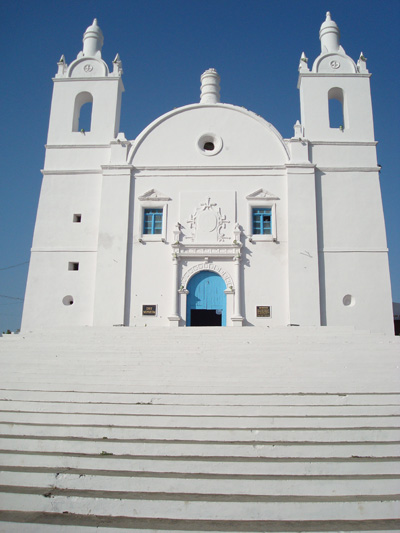
| Other
unusual details are the presence of armaments, like this one (top left)
overlooking a boat shaped prison in the bay (top right). A view inland
from the fort (lower left) reveals whitewashed houses and church
steeples. Many of the churches, like the Church of Saint Francis of
Assisi (lower right), now serve new functions. This one is currently
being used as a hospital but mass is still said here at least once a
year. |
|
 |
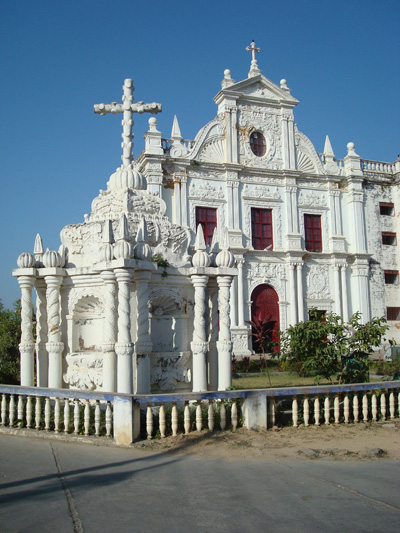 |
| The
church of São Tomé (left) is now home to the Diu Museum.
It also houses a guest house called São Tomé Retiro in a
few upstairs rooms, and some rooms built on the roof. You can also
sleep on the roof for a few
rupees. At right, Saint Paul's has mass daily. |
|
 |
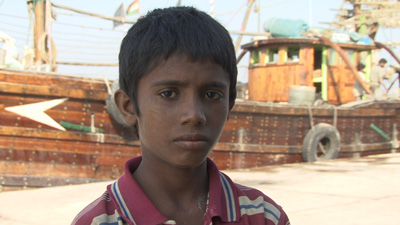  |
| Clockwise
from right, in the tiny winding side streets of Diu Town you can see
the Portuguese influence in the local architecture, and on the opposite
side of the island tiny Vanakbara is home to an all wooden fleet of
fishing boats. One thing that remains unchanged though, is that there
are always parents around trying to stuff their infants into Karen's
arms to have their picture taken. It doesn't seem to matter if they
have a camera or not, they seem perfectly willing to have you take a
picture with your own camera. |
|
 |
|
| Something
that we have found to be unique to the state of Gujarat is the chakara.
Converted from old Royal Enfields, the car size rear wheels are driven
by an overly long chain. The engines are converted to pull start
diesels, and make the strange trumpet like noise that gives them there
name. They are used for buses and for freight, and they can supposedly
haul one ton and still get 65 kilometers per liter. |
|
 |
|
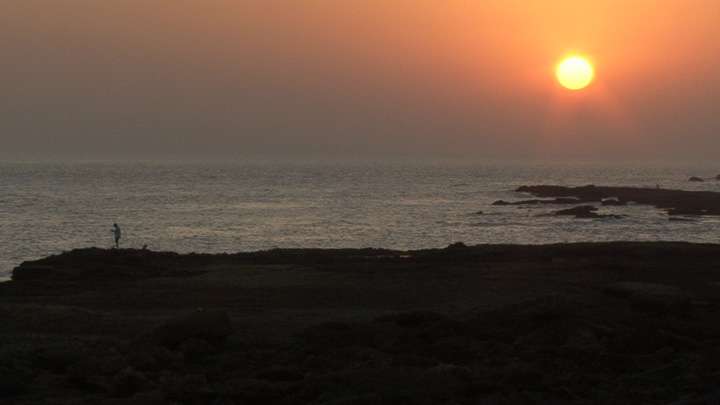
| Diu's
secluded beaches are the perfect place to fish, or just kick back.
Indian people seldom swim, and when they do the women normally go in
fully clothed, and only about up to the knees. |
|


