Dadu Aur Madak
Lucknow| Lucknow
is the capital of Uttar Pradesh and would be the last big town before
we headed into Nepal. There was an Enfield dealer there and Karen's
bike had developed a noise in the primary that turned out to be an oil
seal. We had decided to go through Lucknow also because it had a
Citibank. Lucknow is best known for having been ruled by the Nawabs for
a 100 year period ending in 1857. They were famous for their monumental
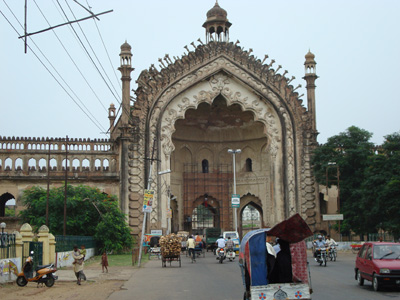
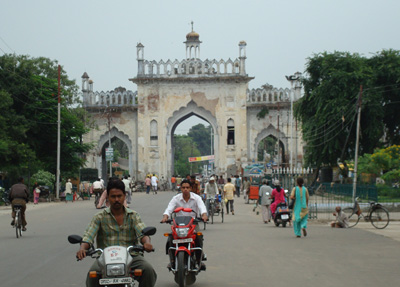
architecture, and the older part of the city has many huge gates as
well as fabulous tombs. It is predominantly Muslim, and the Enfield
service place was in the old section near the Jamma Masjid Mosque. |
|
 |
 |
| In
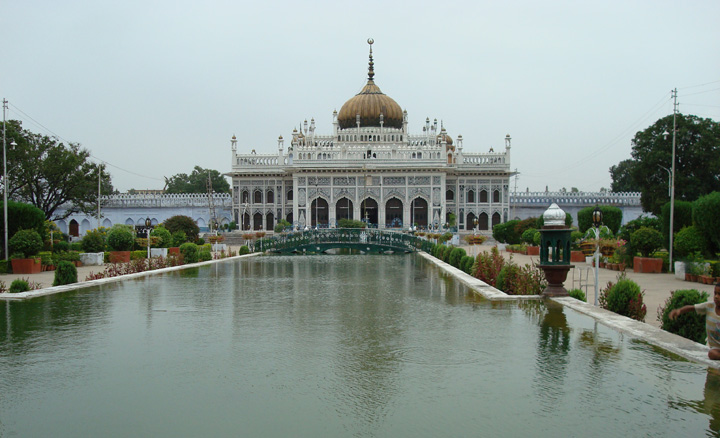
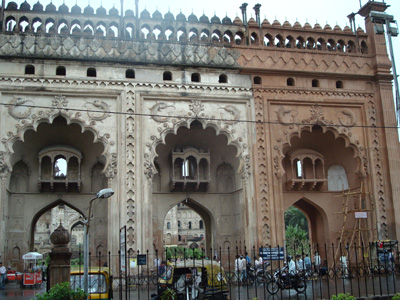
the area between these two gates, through which local traffic passes is
the Husseinabad Imambara (below). It contains the tomb of Mohammed Ali
Shah and his mother. |
|
 |
|
 |
 |
| We
ducked into a doorway to get out of the rain, and encountered a
gentleman named Akas who worked for the Archaeological project that was
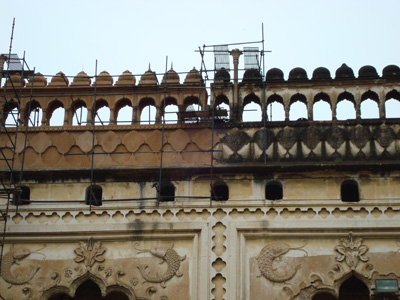
doing the restoration on some of the gates in the old city. You'll note
that both of these gates bear the symbol of two fishes, the symbol of
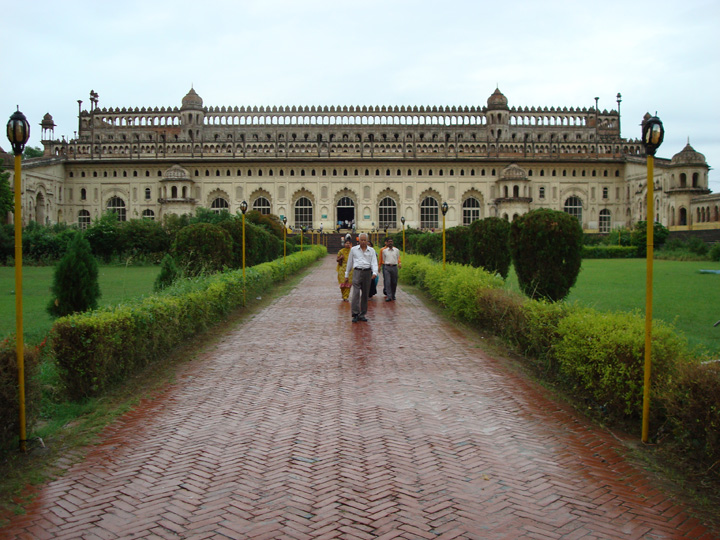
the Nawabs. The one on the right is the gateway to the Bara Imambara
(below), the largest of the tombs in Lucknow. Akas explained that it
was built in the 1780s during a severe famine to provide work for the
Nawab's subjects. |
|
 |
|
| The
Second Siege of Lucknow |
|
| Lucknow's
other famous site is known as The Residency. It is a huge compound
built by the Nawab in 1800 for the British Resident. It is famous for a
siege that took place in 1857 known by the Indians as the First War of
Independence. Our bike was ready, but it had rained all night and
continued into the morning, so we decided to stay another day. We took
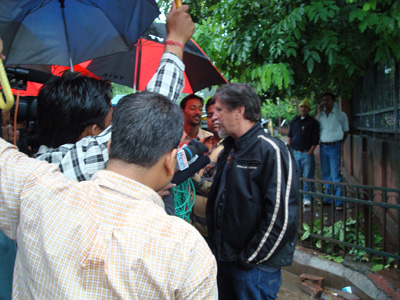
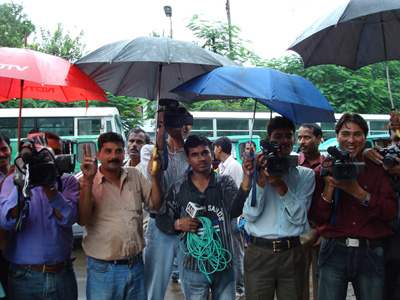
a cab over to visit this site, and were greeted at the gate by a gang
of newsmen. We weren't quite sure why they were interested in us, but
India had won the World Cup in cricket the night before and the streets
had been full of people celebrating until the wee hours, and we
initially thought they were there because of that. But then they
started to ask if we were there to honor our ancestors. I told
them no, my ancestors were from Italy, and I congratulated them on
India's win. We excused ourselves and began heading for the gate. the
news people raced ahead of us so they could get footage of us entering
the gate. They were met with hostility by the Residency staff who
angrily barred them from entering. |
|
 |
 |
 |
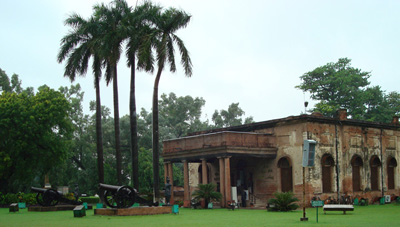 |
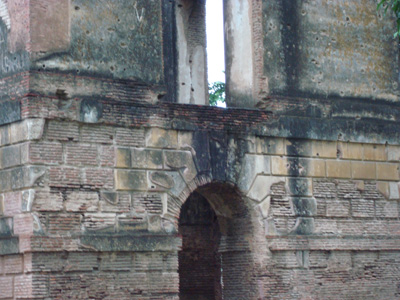
| Most of the
buildings still bear the marks of the bullets and cannonballs (left).
The basement of what is now the museum (right) is where many of the
nearly 3000 people held out for a siege that lasted 147 days. That
siege had ended on September 25th 1857--today's date. We were barely in
the museum for five minutes when the staff began bolting the huge doors
and ordered us into the basement. It seems that a British delegation
that included descendants of the British Resident had arrived in
Lucknow the night before to honor those people, as they have been doing
for many years. However, this being the Sesquicentennial anniversary of
that event they had been met at the airport by a small group of angry
protesters that resented their presence. Some reports said they had mud
thrown at them. Now it becomes obvious that we had been mistaken for
British. After about an hour in the museum basement they let us out to
find that there were about 20 uniformed soldiers there, and the large
entrance gate had been barred. There actually had been no protesters
there, but the staff was afraid the media's presence might attract a
crowd. They apologized to us, and escorted us out an employees gate at
my request, where we took a rickshaw back to our room. We were kind of
surprised when later that evening the desk called our room and said
that there were to men from the government who wanted to speak with us.
They only had sketchy details of the incident and wanted to be sure we
hadn't been harmed or threatened in any way. We told them no, that we
knew it was just a misunderstanding, but I wanted to know how they knew
what hotel we were at. It turns out they were from Indian Intelligence,
and said that every hotel must submit the passport numbers of every
foreign visitor every day. Before they were satisfied that we were all
right, they called their supervisor who they said wanted to talk to me.
He wanted to know when we were leaving, how we were traveling, and if
he could provide us with an escort. I told him that was absolutely
unnecessary. At least we can say our trip hasn't been boring. |
|


