Dadu Aur Madak
Srinigar
 |
|
|
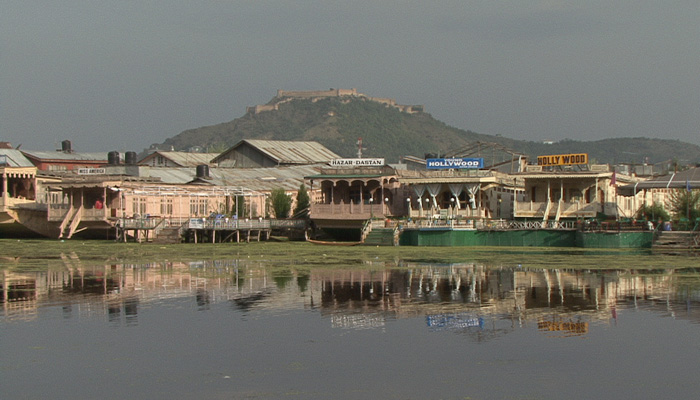
Accommodations in Srinigar are for the most part
houseboats on Dal Lake. The story says that during the Raj era
Kashmir's ruler forbid the British to own land here. Fond of Kashmir's
beauty and the cooler climate, the Brits escaped Delhi's heat by
building elegant houseboats here. Each have several bedrooms with
private baths and lavishly ornate (if not a bit aged) parlors and
dining rooms. The setting is quite beautiful although marred by a
massive military presence of Indian army. They have maintained an
uneasy peace for the past three years, but the majority of the locals
do little to hide the fact that they consider themselves to be
Pakistani. Most agree, though, that the Army's presence there has
benefited the local economy by allowing the return of tourism on which
they rely heavily. |
|
 |
|
|
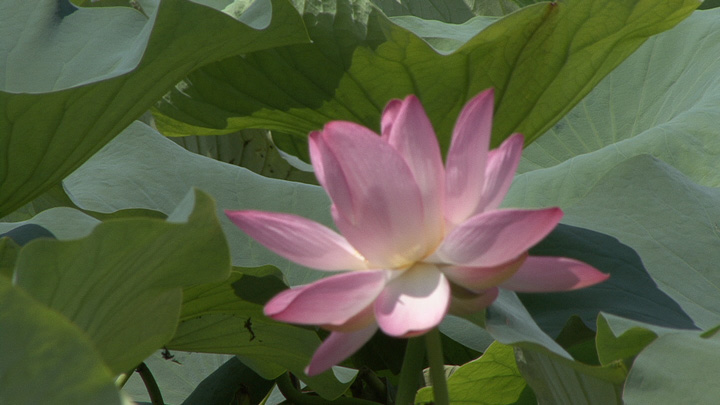
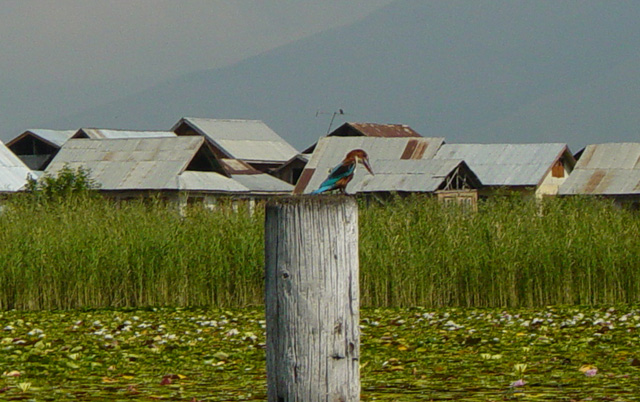
The lake abounds with lotus
flowers (above) as well as water lilies, and the kingfisher (below) is
the state bird.
|
|
 |
|
 |
|
|
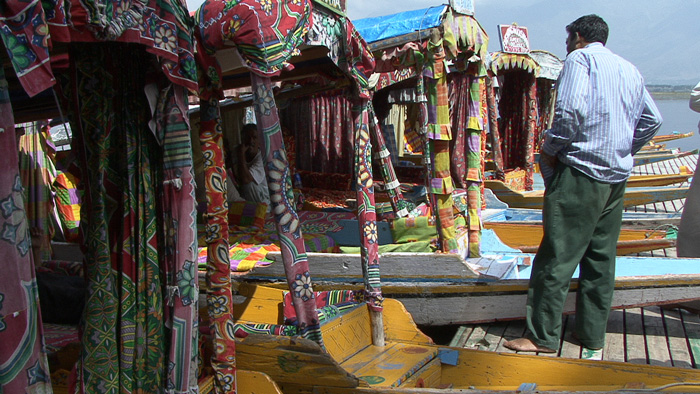
These shikara boats serve
as taxis on the lake.
|
|
 |
|
|
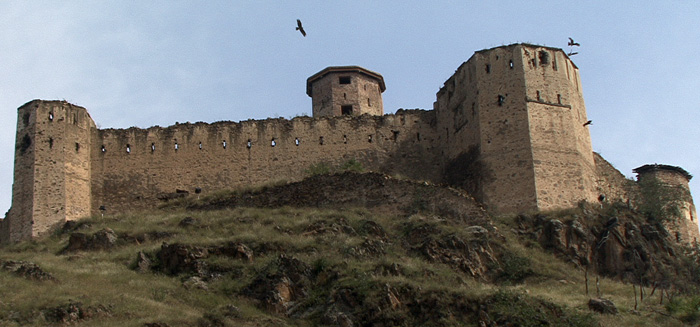
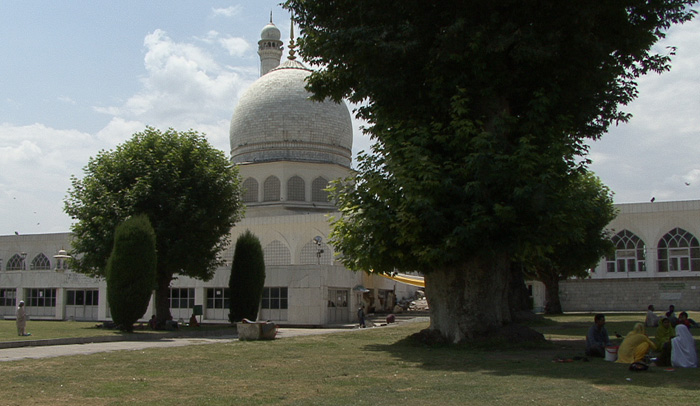
This fort dominates a
hilltop by the lake's edge, and the Jama Masjid Mosque (below) sits
nearby at the lakes edge as well. Kashmir's population is predominately
Muslim and the call to prayer happens five times a day. The 4:30 am
call that blares from the loudspeakers of the town's many Mosques is
especially refreshing.
|
|
 |
|
 |
|
|
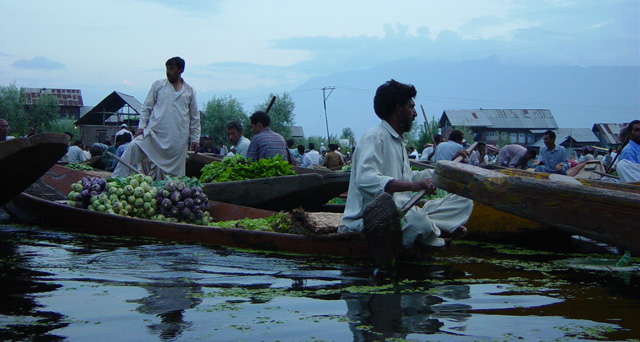
Since you are quite likely
to be awake anyway, you may enjoy one of Srinigar's most lively
events--the floating vegetable market that takes place every morning at
dawn. The majority of the negotiations are barter and little money
changes hands. Some dealers, however, come to cater to the foreign
visitors that come to witness the proceedings offering Kasmiri spices,
especially saffron, and flower seeds like the rare Kasmiri blue poppy.
|
|
 |
|
 |
|
 |
|
