| For
our second day in Petra, we planned an early start to try and beat some
of the crowds. We did not, however, anticipate just how much the
blistering sun and strenuous climbing of the previous day had depleted
our reserves. We wanted to be at the gate at six AM when they opened,
but found ourselves waking after six and deciding to wait until 6:30
when the hotel began serving breakfast. We were at the site by seven
AM, and we were still well ahead of the masses. Our plan was to do the
climb up to The High Place of Sacrifice, and to come down on the
opposite side where there are several interesting structures to be
found in one of the upper canyons. |
|
 |
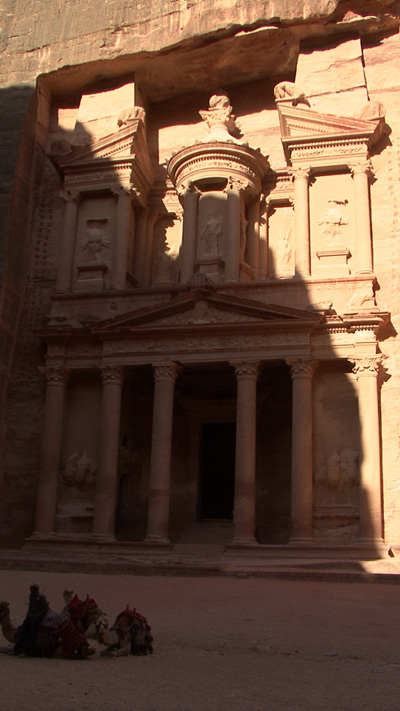 |
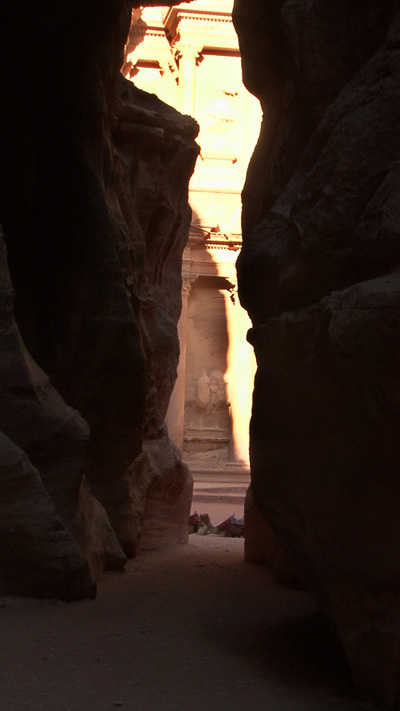
| As
I mentioned, arriving early may yield the uncluttered photo, but the
light can be somewhat problematic. Still it is a quiet and peaceful
time to enjoy this phenomenal setting. |
|
 |
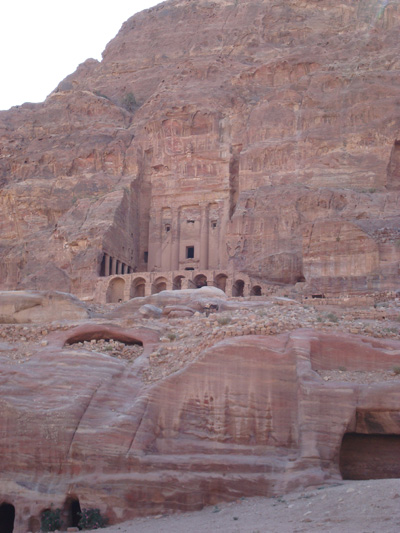 |
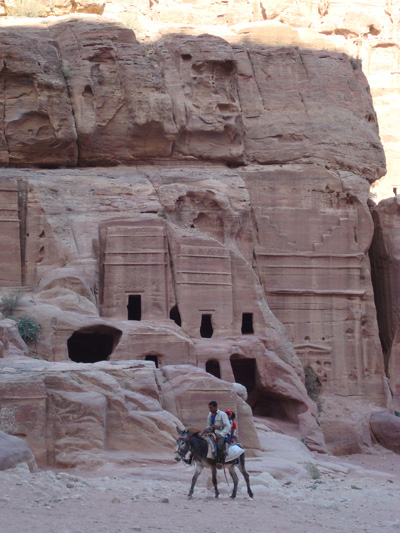
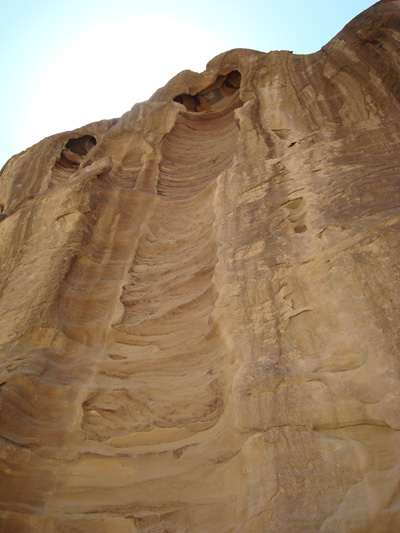
| With
only a handful of locals, the early morning feel is one of otherworldly
beauty. The photos above and below, conspicuously void of the polyester
swarm, are many of the same places we saw yesterday, yet they take on a
whole new dynamic in the morning's calm. |
|
 |
 |
 |
|
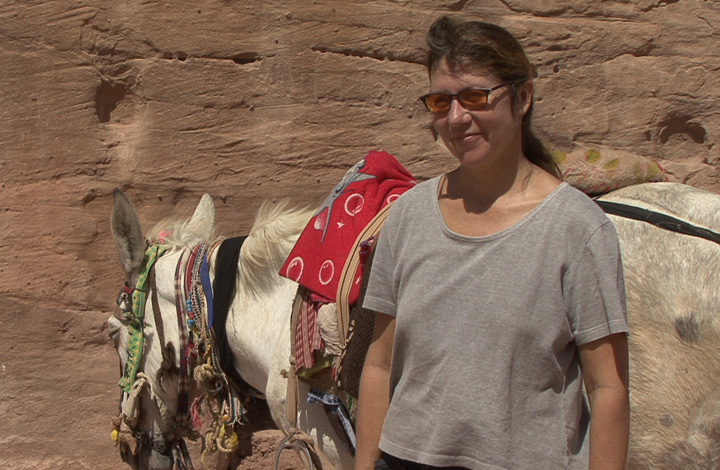
| We learned that
although the High Place of Sacrifice was at roughly the same elevation
as the Monastery that we visited yesterday, the ascent was covered in a
shorter distance making it much steeper. We elected to hire horses for
the trip, justifying it of course by telling ourselves that by spending
the few dollars we were contributing to the local economy. Although we
agreed on a price for going up and back down we ended up paying the man
off at the top and walking down the backside of the mountain. |
|
 |
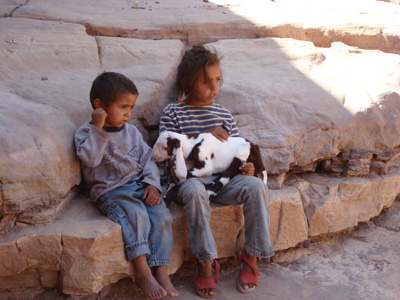 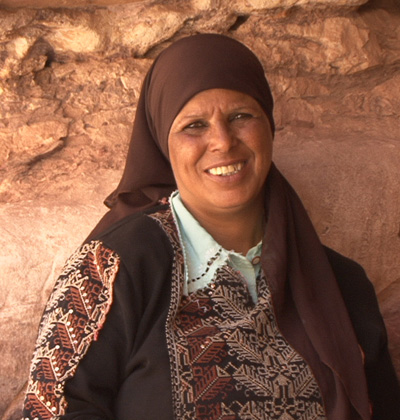 |
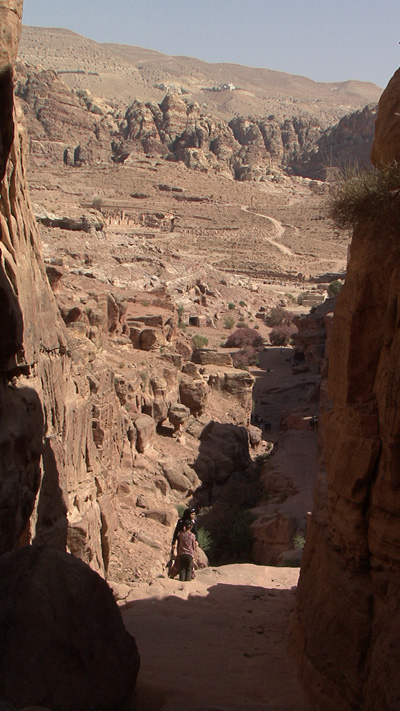
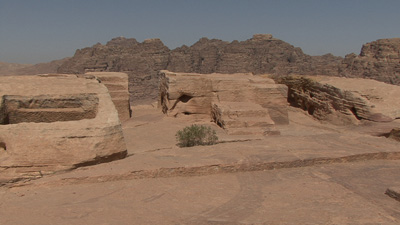
| The
High Place has little of interest in itself other than a simple
sacrificial altar, but the views, both from the top and on the way up
and down, are breathtaking. The morning calm even seemed to permeate
the locals whose normally friendly and playful demeanor was even more
laid back. |
|
 |
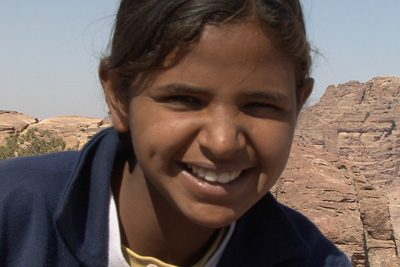 |
| This tiny
sacrificial altar and the small viewing plaza is all that adorns this
mountain top, but Karen quickly made friends with this young Bedouin
girl. She had a tiny carpet shelter where she sold bottles of water,
and explained to us that she was from Umm Sayhoun, the resettlement
village that we talked about earlier. She told her entire story in the
third person singular feminine, a style that was immediately endearing.
When Karen remarked about her dimple she didn't immediately understand,
but then explained that it was where her mother had kissed her when she
was still in the womb. |
|
 |
 |
| On
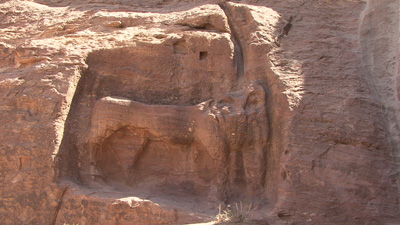
the way down, the first point of interest is The Lion Fountain at left.
The Lion, carved in relief is nearly fifteen feet long. It requires
some imagination, but the distinct channel carved at the top right once
fed the Lion's now missing head. There is actually a cistern carved
above and behind to catch water runoff and they were able to control
the release which emitted from the Lion's mouth. Sometimes though it is
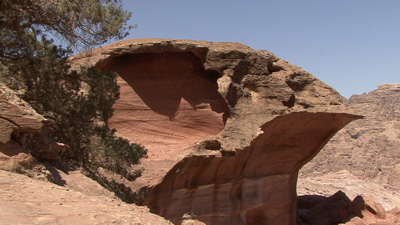
simply the rock itself that steals the show. |
|
 |
|
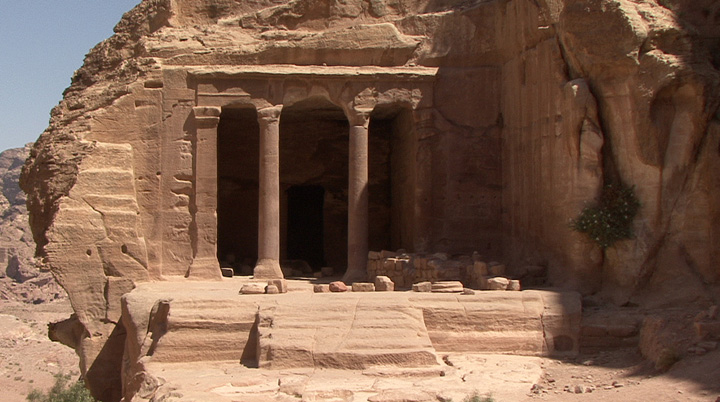
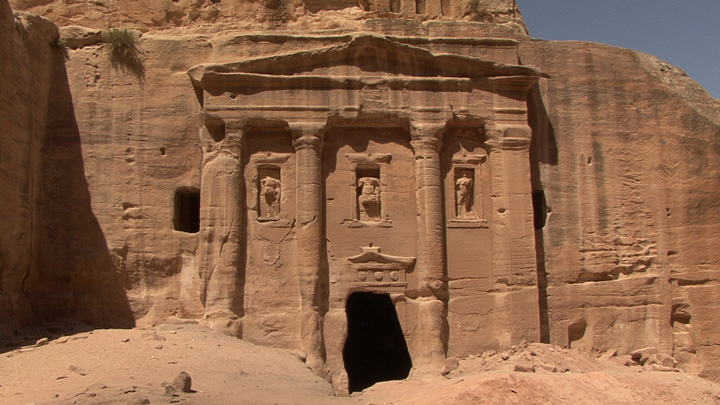
| A bit further
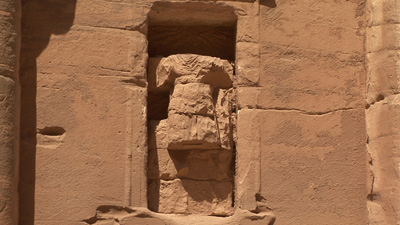
down the canyon you come to the Garden Tomb (above). This tomb, and the
Soldier's Tomb (below) a few feet down and to the left side of the
canyon are still more than four hundred meters above the valley floor. |
|
 |
|
 |
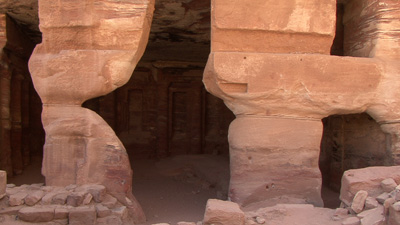 |
| The Soldier's
Tomb is so named because of the center frieze (left) which depicts a
man in distinctly Roman soldier garb believed to be buried here. As you
face the tomb the photo at right depicts The Garden Triclinium that
would be at your back. There are several of these ceremonial dining
places scattered around Petra, the purpose of which are somewhat
unclear. Picnic groves for Nabateans? |
|
 |
|
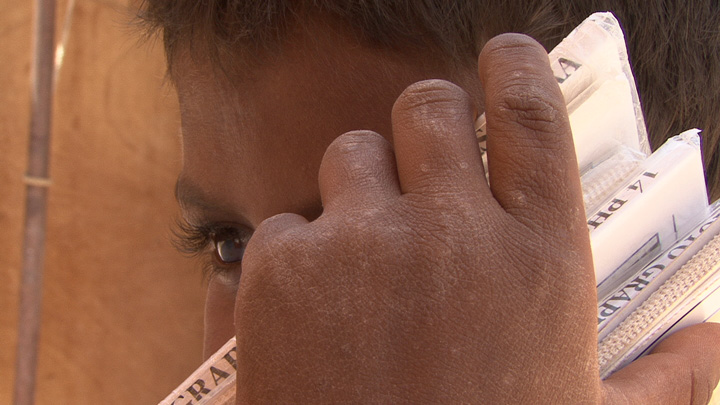
| When we finally
reached the valley floor we stopped to by a drink, where we encountered
this shy young postcard salesman. Although we have a fair number of
photos of Petra (a couple hundred more than you have had to sit
through), Karen still felt the need to buy his photo postcards. He
seemed particularly excited about the extra 25 cents that Karen gave
him. We got the feeling that he didn't see any of the proceeds of his
postcard sales. We could certainly continue, and I have omitted the
free standing buildings and the colonnaded street. Although very impressive, they are not unlike the structures at Jerash. Besides, it would be all to easy to overload the reader and the best advice we could give is see for yourself! |
|
 |
|
 |
|
 |
|